 Elanorya
Necklace photography
Necklace photos where the neckline is part of the product
Every other piece of jewelry sits on skin. A necklace spans skin, collarbone and whatever the base photo is wearing — so the garment arrives in the frame with the piece, and choosing it is part of choosing the shot.
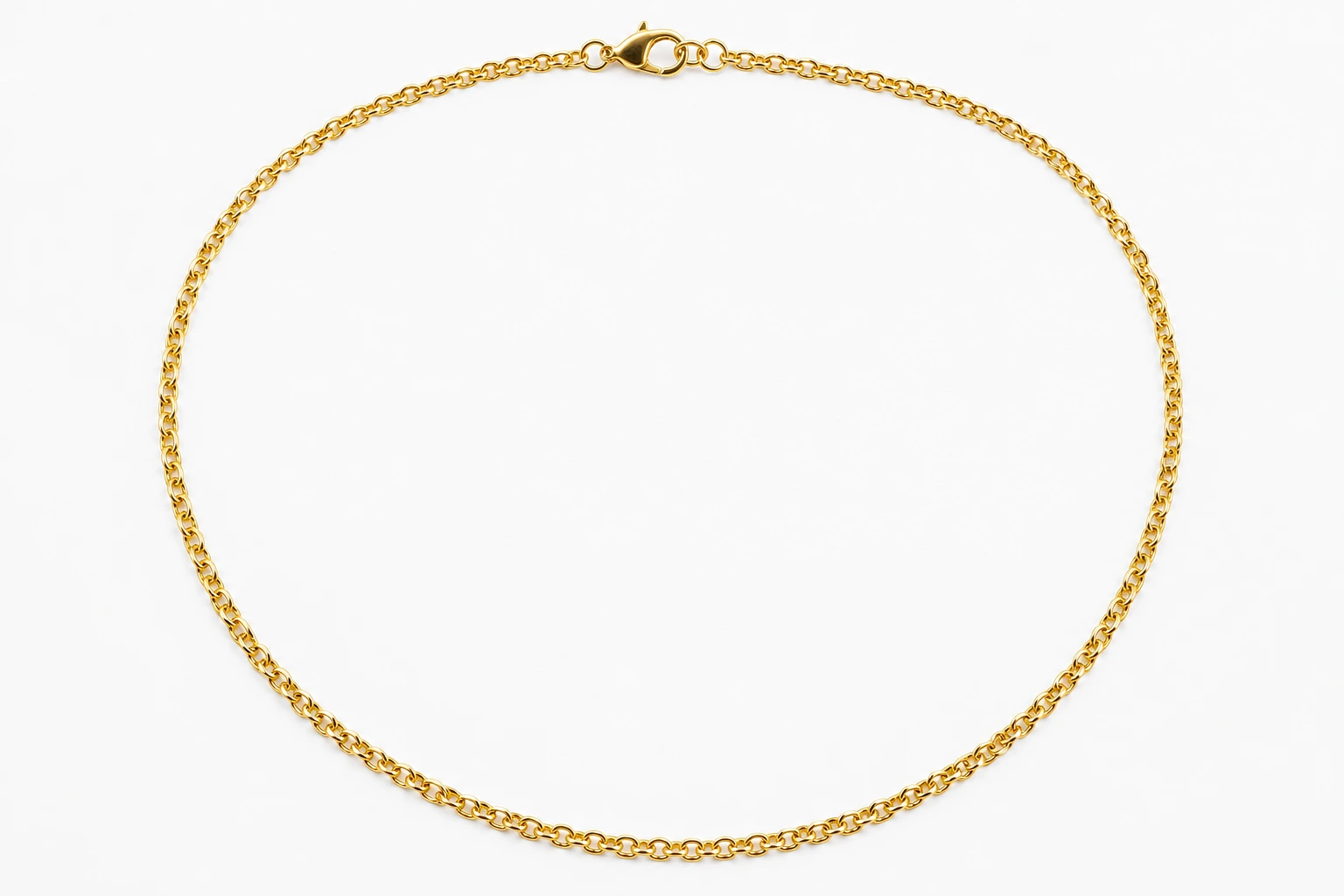
Where the chain lands, and why the neckline is always in the picture
These are conventional length names rather than settings in the app. They are useful here because they describe where a piece falls — which is the thing a flat-lay cannot show.
1 · Choker
Sits at the base of the neck, above almost any neckline. The garment matters least here, which makes chokers the safest piece to shoot across a mixed range.
2 · Princess
Falls just below the collarbone. Still mostly on skin, but a high neckline starts to compete with it.
3 · Matinee
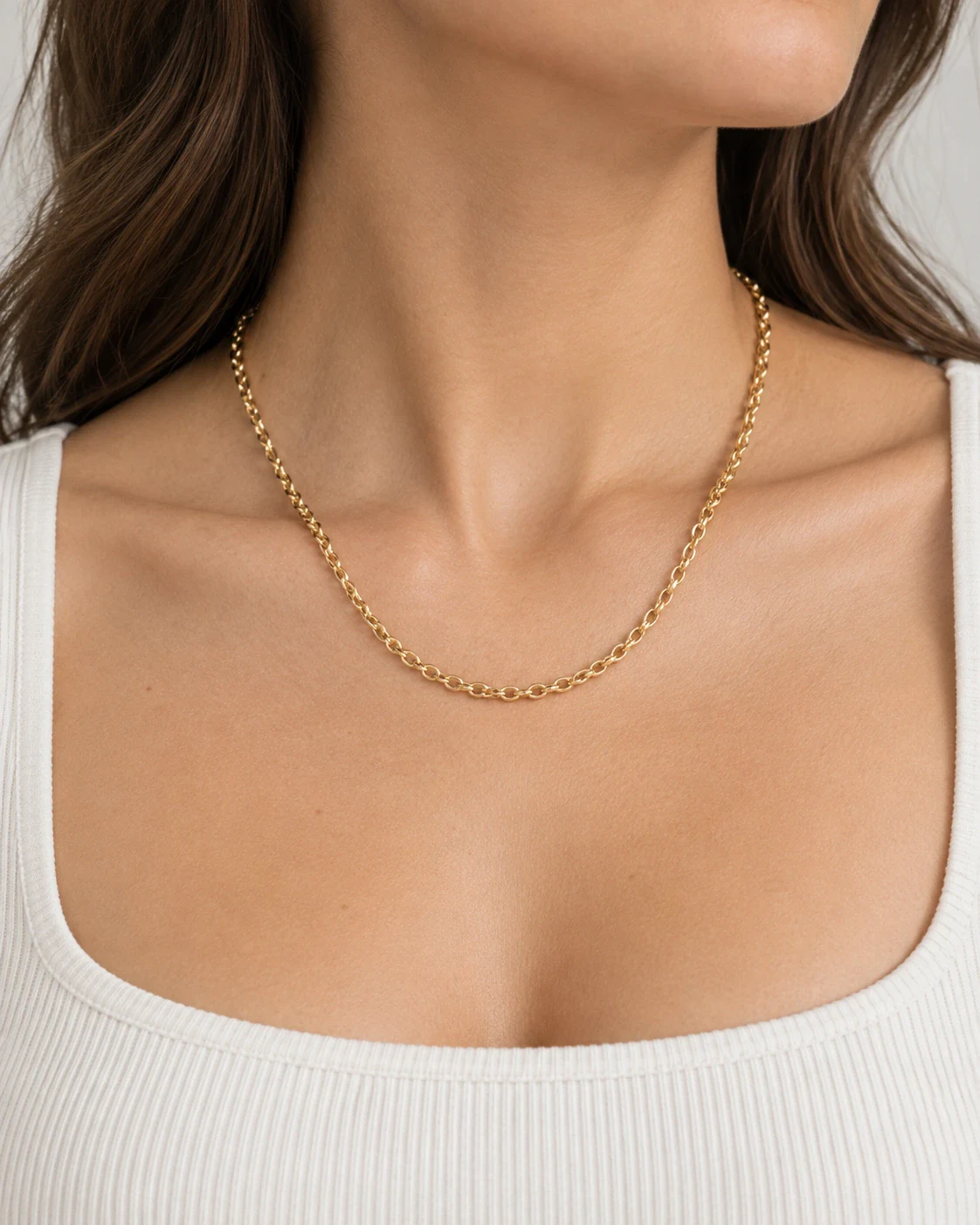
Lands on the upper chest — the second region the placement instruction names. At this length the piece is almost always overlapping fabric, so the top you choose becomes part of the product photo.
4 · Neckline
The edge of the garment. Wide framing is the only framing offered here, so whatever the base photo wears lands in the shot with the piece. You can crop the exported image afterwards, but you cannot crop it out of the generation — choosing the base deliberately is cheaper than fixing it later.
What goes wrong, and what to do about it
Most of these are decided by the reference photograph, before a credit is spent.
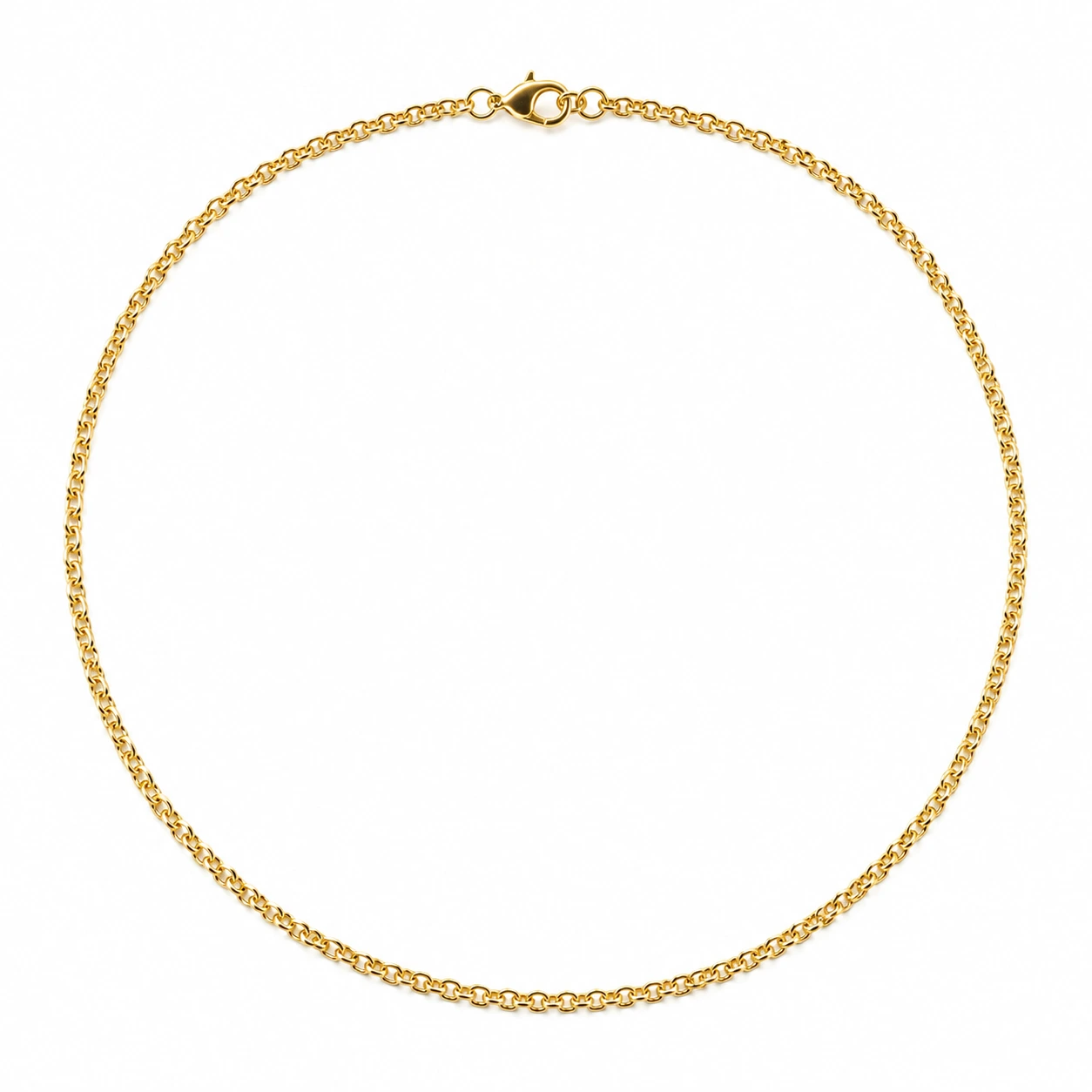
The chain reads as a generic line
Shoot the chain close and lit from the side so links cast their own shadows. A chain lit flat from the front loses its pattern first.
A tangled or twisted flat-lay carries over
Lay the piece out the way it hangs before photographing it. A twist in the reference is a twist the output has been given no reason to remove.
The pendant sits crooked
Photograph the pendant square to the camera. An asymmetric reference produces an asymmetric result, and on a necklace that reads as a defect rather than a style.
A high neckline swallows the piece
Match the base portrait to the length: longer pieces need an open neckline, or the product spends half its length behind fabric.
Skin and metal tone fight each other
The base photograph decides both. A warm metal on a warm skin tone in warm light is the one combination worth checking before you commit a whole range to it.
The range looks inconsistent
One model, one garment, one light. Necklaces are the category where this discipline pays the most, because the frame carries the most context.
Source and result
Empty until there are real generations to show. A diagram explains a problem; it is not evidence of output.
Questions
Can I choose the chain length?
No — and that is not a missing feature so much as a description of what the tool does. Length comes from the necklace you photographed. Selling one design in three lengths means three reference photographs.
Can I get a close-up of just the pendant?
Not from the model preview. Close framing is offered for rings and bracelets only. A necklace needs the neck for scale and the shoulders for drape, so it is always generated wide.
Will the clasp show?
Usually not, because a worn necklace hides its clasp at the nape. If the clasp is part of what you are selling, photograph it separately and put that image in the listing too.
Does the model's clothing matter?
More than for any other category. The instruction places the piece across the neck and upper chest, so the base photo's clothing comes along with it. Holding it constant across a range is what makes the set look like one collection.